eVTOL: an overview

André BORD
President of the AAE eVTOL working group1
The following people also contributed to these studies: Alain Cassier, Blanche Demaret, Jean-Pierre Dubreuil, Bernard Fouques, Alain Garcia, Bernard Rontani, Raymond Rosso
In 2010, given the proliferation of eVTOL projects targeting the UAM market, AAE decided to set up a monitoring committee within the Civil Aviation commission. Preliminary studies showed that only small vehicles would be able to utilise the energy stored in batteries and that eVTOLs with power distributed across several rotors appeared to offer a promising avenue for innovative applications.
This research, which focused on all-electric aircraft, led to the publication of AAE Dossier 53 which concluded that, on the basis of technologies available in 2022 for the various components of the propulsion system, these aircraft would marginally meet the performance specifications for an air taxi, but that significant technical, economic and societal obstacles would need to be overcome before they could be deployed.
An international conference, “Urban transportation of passengers by eVTOL”, held in Paris in September 2022 provided an overview of ongoing developments and identified key actions required for a successful UAM roll-out of urban air mobility. It confirmed the conclusions of Dossier 53, whilst also highlighting the existence of a complementary market to UAM, involving missions currently carried out by helicopters, such as providing access to people in remote areas, emergency and police services. Such operations typically have better safety and lower operating costs, even though they involve the same level of noise but without pollution.
The Paris 2024 Olympic Games were expected to provide a first demonstration of the capabilities of these aircraft. Although the demonstration was cancelled, the recent launch of a similar large-scale operation in the United States justifies continued monitoring of technological developments, particularly as the current rapid development of dual-use drones could foreshadow a similar development for eVTOLs should it yield positive results.
This Newsletter provides a broad overview of technical and regulatory aspects, ongoing projects, applications, different national approaches, nuisances and public acceptance.
Use of eVTOLs for the 2024 Paris Olympic Games
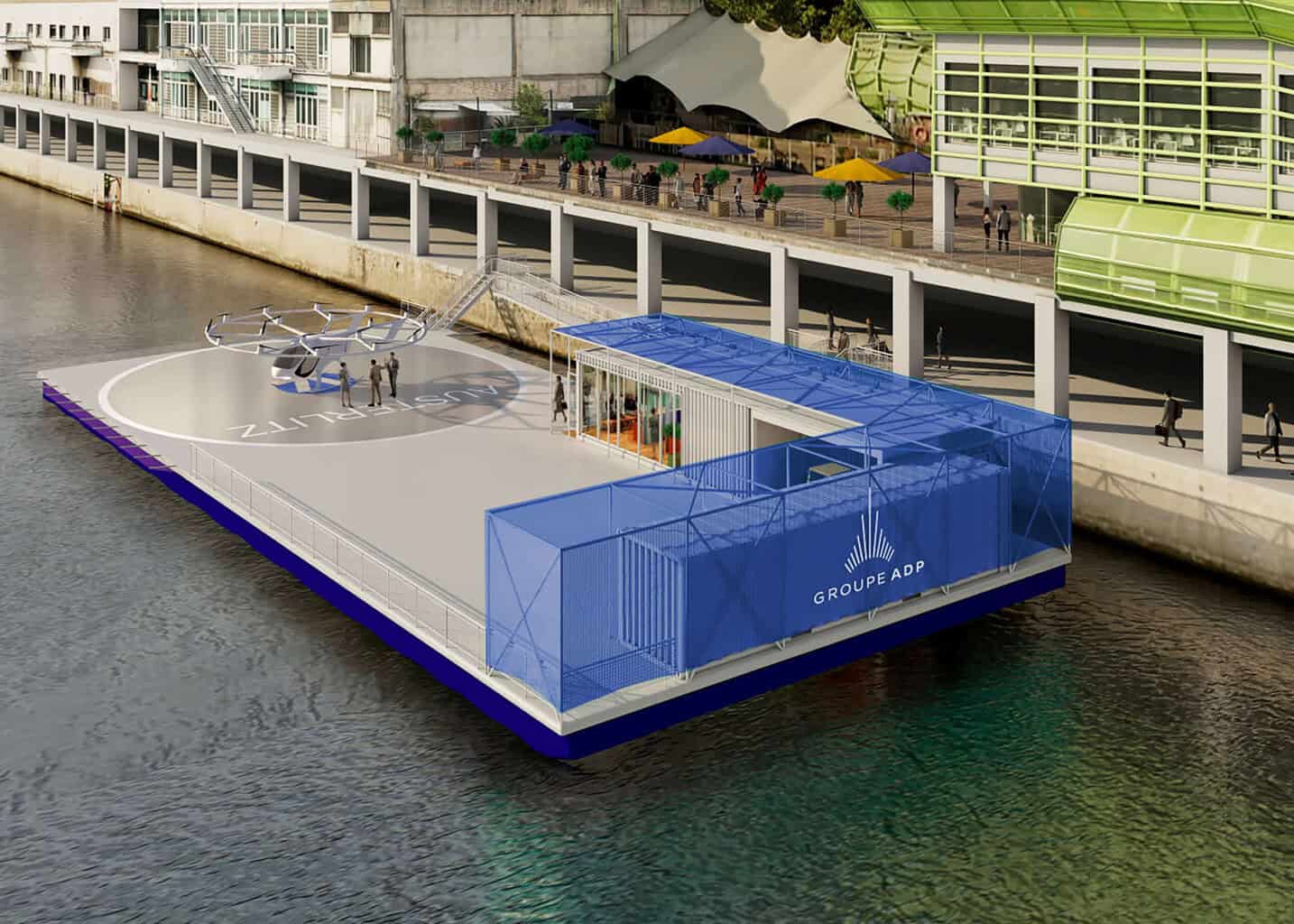
Vertiport design by the ADP and RATP groups – Photo © Groupe ADP
A key milestone in these UAM developments was to be the first trial of representative operations using certified aircraft, scheduled for the 2024 Paris Olympic Games; several candidates came forward, although only the Volocopter project could realistically aim for certification by that date.
These test flights were intended to assess environmental impact and public acceptance, as well as testing eVTOL integration into air traffic.
The project led by Aéroports de Paris (ADP) was heavily publicised, attracting many vocal supporters and critics. Among other challenges, it required the installation of a landing and take-off platform on the Seine at Austerlitz, one of the five vertiports planned for the project. This installation, in the heart of the capital, was subject to a public inquiry, which concluded that the benefits of the platform did not outweigh its disadvantages; in July 2024, however, the government published authorisation to install the platform and the Conseil d’État (State Council) gave it a provisional go-ahead on 24 July.
When certification was not obtained (the American electric motor was not certified), the Paris trial was definitively cancelled and, on 18 December 2024, the Conseil d’État revoked its provisional authorisation.
Volocopter continued to organise demonstrations (in Versailles and the Saint-Cyr military academy) but filed for bankruptcy and laid off its staff in March 2025, having lost the support of German industry and government, and after spending an estimated two billion euros.
It was nevertheless purchased (for ten million euros!) by Diamond Aircraft, a subsidiary of the Chinese Wanfeng Group, which specialises in the manufacture of general aviation aircraft.
Further trials, involving other aircraft seeking certification, are planned or currently underway in several major urban areas, particularly in the UAE, in collaboration with Joby. The recent decision by US authorities to launch the eIPP programme could prove to be a decisive step in confirming – or otherwise – the acceptability of these new aircraft.
The FAA pilot programme to trial eVTOL operations
A large-scale operation similar to the failed Paris 2024 Olympic Games initiative is being prepared in the United States, with aircraft still awaiting certification.
Government support is assured: the federal administration launched this initiative following the decree of June 2025 encouraging authorities to “Unleash American drone dominance”. In March 2026, the authorities set out the details of this federal pilot programme, officially known as the “Electric Vertical Take-off and Landing (eVTOL) and Advanced Air Mobility (AAM) Integration Pilot Programme” (eIPP), to mark the 250th anniversary of the United States.
From summer 2026, and for an expected period of three years, several selected types of aircraft (eight out of more than 30 candidates), weighing over 750 kg – presumably to eliminate the multitude of small drones –, both piloted and unmanned, carrying passengers or cargo (Joby S4, Archer, BETA Technologies, Electra, Wisk, Ampaire, Elroy Air and Reliable Robotics) have been given the go-ahead by the authorities to carry out commercial operations in a controlled environment, across a wide variety of locations (in 26 states), and a number of different climate and operational conditions, in anticipation of their certification by the Federal Aviation Authority (FAA). These operations would be covered by the so-called “Other Transaction Authority (OTA)” authorisation, which bypasses the traditional certification process prior to the commercialisation phase. These aircraft would, however, need to have commenced the certification process with the FAA. This approach, which allows manufacturers to demonstrate a form of compliance with safety objectives through the accumulation of controlled operations, represents a radical change to the certification process that has not yet been discussed with the other authorities. This operation may provide operational insights into safety (operating conditions, noise pollution) but not into the quantification of the rate of catastrophic failures, which requires a far greater number of flight hours than an experimental programme (though it would enable the identification of a major safety issue not detected by safety analysis).
In April 2026, Joby carried out an operational demonstration of the Joby S4, with a pilot on board, taking off from JFK Airport and making several landings at heliports in Manhattan whilst following the proposed future commercial route. This flight marks the start of this large-scale operation, which is due to begin officially this summer.
| MTOM (kg) | Pax | Range (kg) | Type | Nature | Conv/fixed/prop | Control | Energy | Status | |
| Joby S4 | 240 | 4 | 160 | VTOL | Convertible | 6+0+0 | Pilot | Battery | Conv. pilot |
| Archer Midnight | 3175 | 4 | 96 | VTOL | Convertible | 6+6+0 | Pilot | Battery | Conv. auto |
| Beta Alia CX 300 | 2720 | 5 | 460 | CTOL | Fixed | 0+4+1 | Pilot | Battery | Conv. pilot |
| Electra EL2 | 1400 | 1 | STOL | Fixed | 0+0+8 | Pilot | Hybridation tg | ff 2023 | |
| Wisk Gen 6 | ~2750 | 4 | 144 | VTOL | Convertible | 6+6+0 | Autonomous | Battery | Conv. auto |
| Ampaire/Cessna 208B | 3996 | 9 | 1700 | CTOL | Fixed | 0+0+1 | Pilot | Hybridation tg | |
| Elroy Air | ~750 | Cargo 227 kg | 644 | VTOL | Fixed | 4+4+0 | Drone | Hybridation tg | |
| Reliable Robotics/ Cessna 208B | 3996 | Cargo 2000 kg | 1700 | CTOL | Fixed | 0+0+1 | Autonomous | Turbo |
AAE CAC eVTOL 05.2026
The eight selected aircraft cover virtually all types of aircraft and operations, including a hybrid drone.
All energy sources are included, except hydrogen, and three are hybrid systems with turbogenerators. The Beta Alia in the table is assumed to be the CTOL version, as the VTOL version has only four lift rotors. The Cessna Caravan appears in two versions, including a conventional but autonomous cargo variant (a drone?). Convertible versions predominate, even though they pose the greatest certification challenges, exacerbated by the choice of the autonomous Wisk Gen 6, which aims to clarify the specific rules governing the use of a highly automated aircraft in the lower altitudes of airspace.
Several types of services will be trialled:
- urban taxi services
- regional passenger transport, including STOL (Short Take-off and Landing) aircraft
- freight networks and logistics transport
- emergency medical procedures
- autonomous flight technologies
- offshore transport and logistics.
The aim is to gather information over a three-year period on flight safety, community acceptance, infrastructure requirements and the potential for integration into existing airspace. This large-scale experimental initiative, covering several types of vehicles and operations, is innovative. However, it is not dissimilar to the approach taken by EHang in China, which logged more than 50,000 flights – some of them manned – before obtaining type certification for its EHang 216. It should enable the Federal Aviation Authority (FAA) to refine the new regulations for this type of operation. This three-year pilot scheme consequently delays the first commercial operations of certified eVTOLs in the United States and, in all likelihood, across the Western world.
This large-scale programme is highly ambitious and demonstrates, on the one hand, the difficulty of certifying these new aircraft “conventionally” and, on the other, the political will to demonstrate – or not – the acceptability of various innovative aircraft concepts on a controlled experimental basis, under representative operational conditions.
The comparison with the abandoned bid for the 2024 Paris Olympic Games is indicative of Europe’s conservative – or cautious – mindset, which is not conducive to innovative developments.
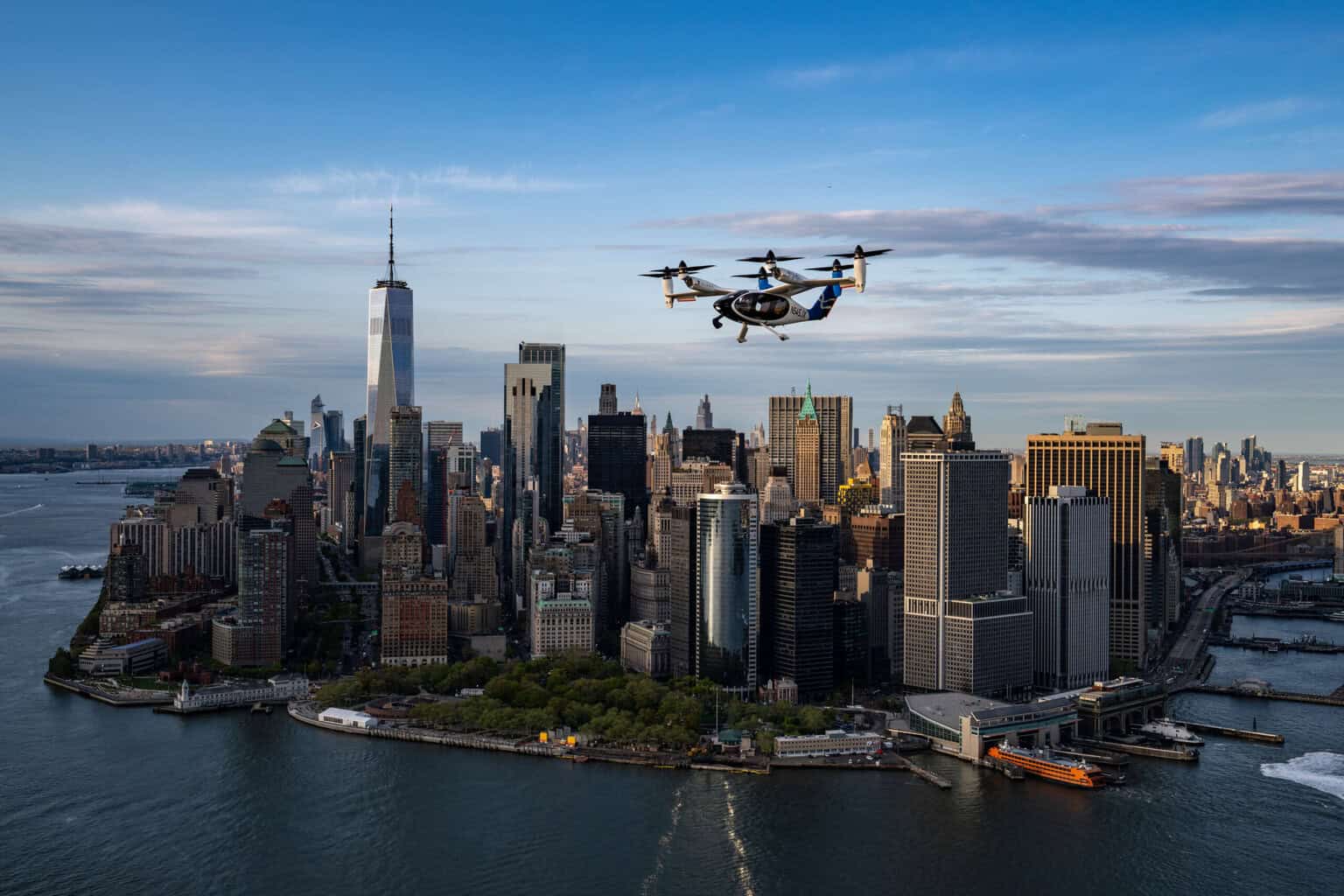
The Joby electric air taxi flies over New York © Joby Aviation
State-of-the-art power system technologies
Batteries
Although the specific performance of liquid-electrolyte lithium-ion batteries has improved significantly over the past ten years, the specific energy of battery packs in 2025 plateaued at around 250 Wh/kg, whilst the associated specific power can exceed 1,500 W/kg and is not a critical factor for the aircraft in question.
The hope of a 50% improvement in these specific performance metrics and safety aspects through the use of a lithium-metal anode with a liquid or solid electrolyte, or a silicon anode, appears to be fading, given the low cycle life and service life currently demonstrated.
Research is continuing and optimistic announcements abound, but it will take a long time to find an acceptable technical solution and scale it up to industrial levels without strong demand from the car industry, which is more sensitive to economic than energy considerations, and will for some time remain constrained by the need to recoup the enormous investments involved in the development and production of “conventional” lithium-ion batteries. These will therefore continue to power electric vehicles in the medium to long term.
Experiments are being carried out with fuel cells that use hydrogen to generate electricity, supplemented by batteries to manage peaks in power demand, as well as “hybrid” solutions incorporating thermal generators, with the aim of extending flight duration; however, such solutions appear too complex for large-scale development.
Engines
A key parameter for aeronautical applications is power density (kW kg), a weak point of electric engines which is not significantly affected by scale. The technologies used are conventional, and both types (radial- and axial-flow) are employed. The quest for the lowest possible weight has led Joby to develop its own engines, featuring composite casings and claiming a power-to-mass ratio of over 8 kW/kg – significantly higher than the figures initially envisaged 10 years ago (1-3 kW/kg). This engine has not yet been certified, whilst Safran has just had the first electric aircraft engine certified by EASA.
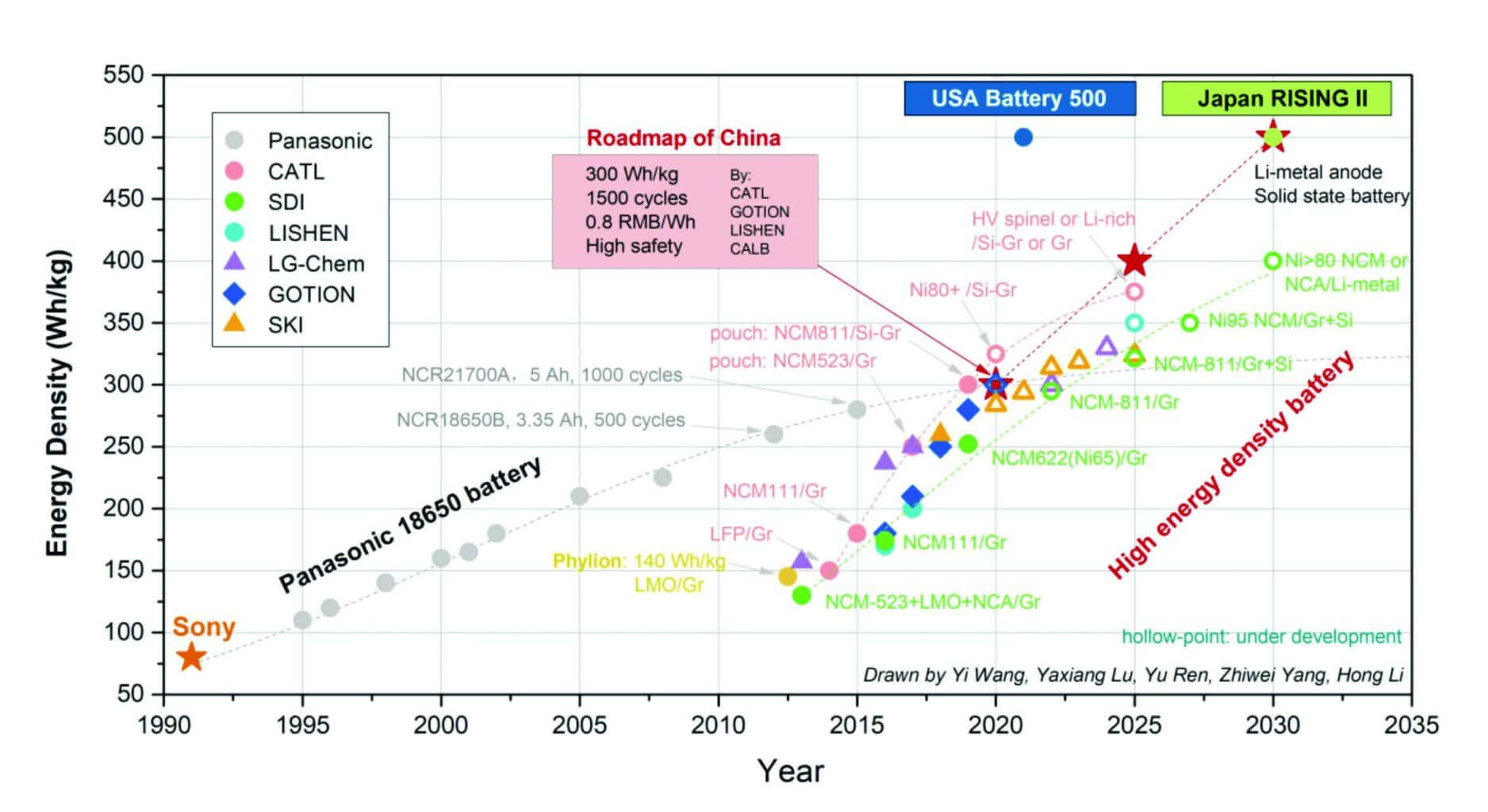
Comparison of gravimetric performance of different batteries intended for automotive applications © Prof. Hong Li, Chinese Academy of Sciences
The explosion in drone use
Power supply technologies similar to those mentioned above have enabled the development of a wide range of drones, which are less constrained by safety considerations and, for the time being, noise pollution.
That is why, given the technological and regulatory upheavals of the last decade, and the unprecedented surge in drone use – which in France rose from 1,200 operators in 2014 to over 145,000 in 2025 –, AAE, in association with the French Aeronautics and Astronautics Association (3AF), carried out a review of the current situation regarding civil drones in France and Europe, resulting in the recently published Dossier 57 “2015-2025: The rise of civilian drones”.
- The regulatory landscape is undergoing significant change, with a view to ensuring the safety both of drones and their operations:
Europe (EASA) now regulates civil drones, regardless of maximum take-off weight, under three risk-based categories: Open, Specific and Certified. However, the regulatory framework for the Certified category – particularly for high-risk flights and the carriage of passengers – has yet to be defined. Certified drones and unmanned eVTOLs, which are very similar in definition, could therefore fall under a common regulatory framework. - The U-Space concept aims to ensure the safe coexistence of drones and manned aviation through dedicated airspace and automated digital management by specialist U-Space Service Providers (USSPs). Regulated by the European Union and currently being rolled out, it is also intended to facilitate the safe integration of drones and piloted eVTOLs into airspace.
Significant technological advances, particularly in the field of data links and connectivity, enable communication between the drone and its ground control station, for the use of command and control (C2) and the transmission of data from on-board sensors. It can be achieved in several ways by optimising frequency management according to intended ranges.
The development of these technological building blocks for civilian and military drones – now produced in their millions – could facilitate their application to eVTOLs. Furthermore, a shared set of components could help meet the cost targets for civilian eVTOLs. In addition, the designers of U-Space have paved the way for potential manned eVTOL operations.
The maximum weight of drones is similar to, and even exceeds, that of manned eVTOLs, and this explosion in diverse applications could therefore pave the way for the wide-spread adoption of eVTOLs.
A drone flying over the Champ de Mars in Paris – CCO Public Domain
The various projects
Of the approximately 1,100 projects identified, four appear to be close to type certification.
The Volocopter (MTOM 900 kg, 1 pilot, 1 passenger, 35 km, wingless) has undergone a steady, exemplary development process, but has not yet obtained EASA certification.
The Chinese EHang 216 pilotless project (MTOM 600 kg, 2 passengers, 35 km, wingless), has already been granted Chinese type and production certificates, as well as authorisation to carry passengers, paving the way for large-scale commercial operation in China, subject to constraints that are not yet fully apprehended. Despite its limited performance, this certification marks an important milestone for eV-TOLs.
EHang is also developing the VT 35 (MTOM 900 kg, 2 passengers, 200 km), an unmanned aircraft with a tandem wing, eight fixed lift pods and a propulsion pod, demonstrating the benefits of wings to performance.
The Joby S4 (MTOM 2,404 kg, 1 + 4 passengers, 160 km), a convertible with six tilting nacelles, appears to be the most advanced and credible winged eVTOL. Its performance would meet the requirements of an air taxi, with an optimised empty weight achieved in particular thanks to engines designed by Joby. It is the first eVTOL to have successfully completed a conversion with a pilot on board on 22 April 2025, following 15 years of development.
However, it has yet to be certified, as the complexity of the aircraft requires numerous failure scenarios; the eIPP will provide an initial assessment of its reliability. Pending certification, Joby is looking for operators outside the US, notably in Dubai and Japan.
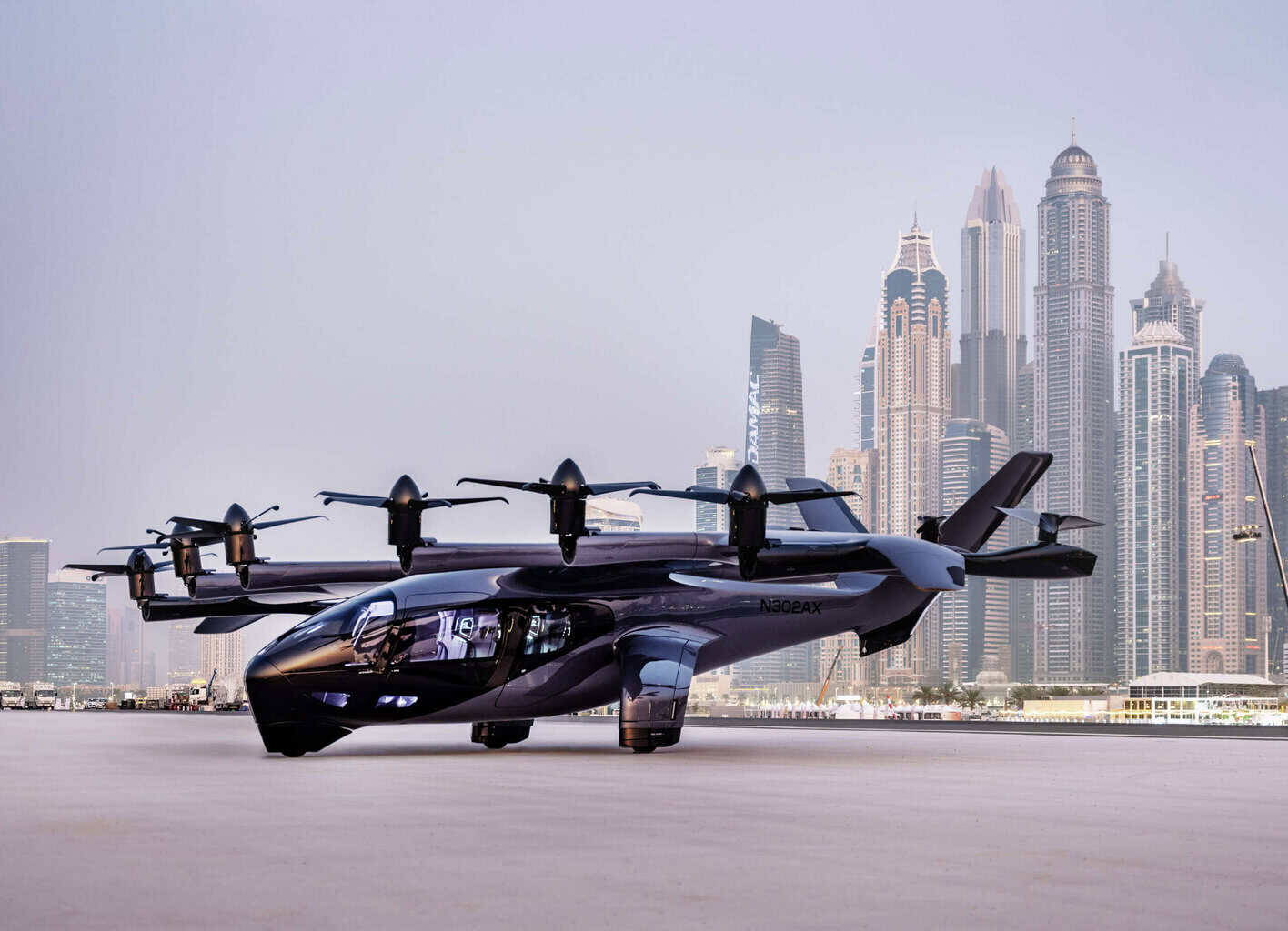
The Archer Midnight, also a convertible, is following a similar develop-ment path and is likewise facing certification hurdles. Announced for the 2028 Los Angeles Olympic Games, it has not yet carried out a piloted conversion, but has completed manned flights in aircraft mode.
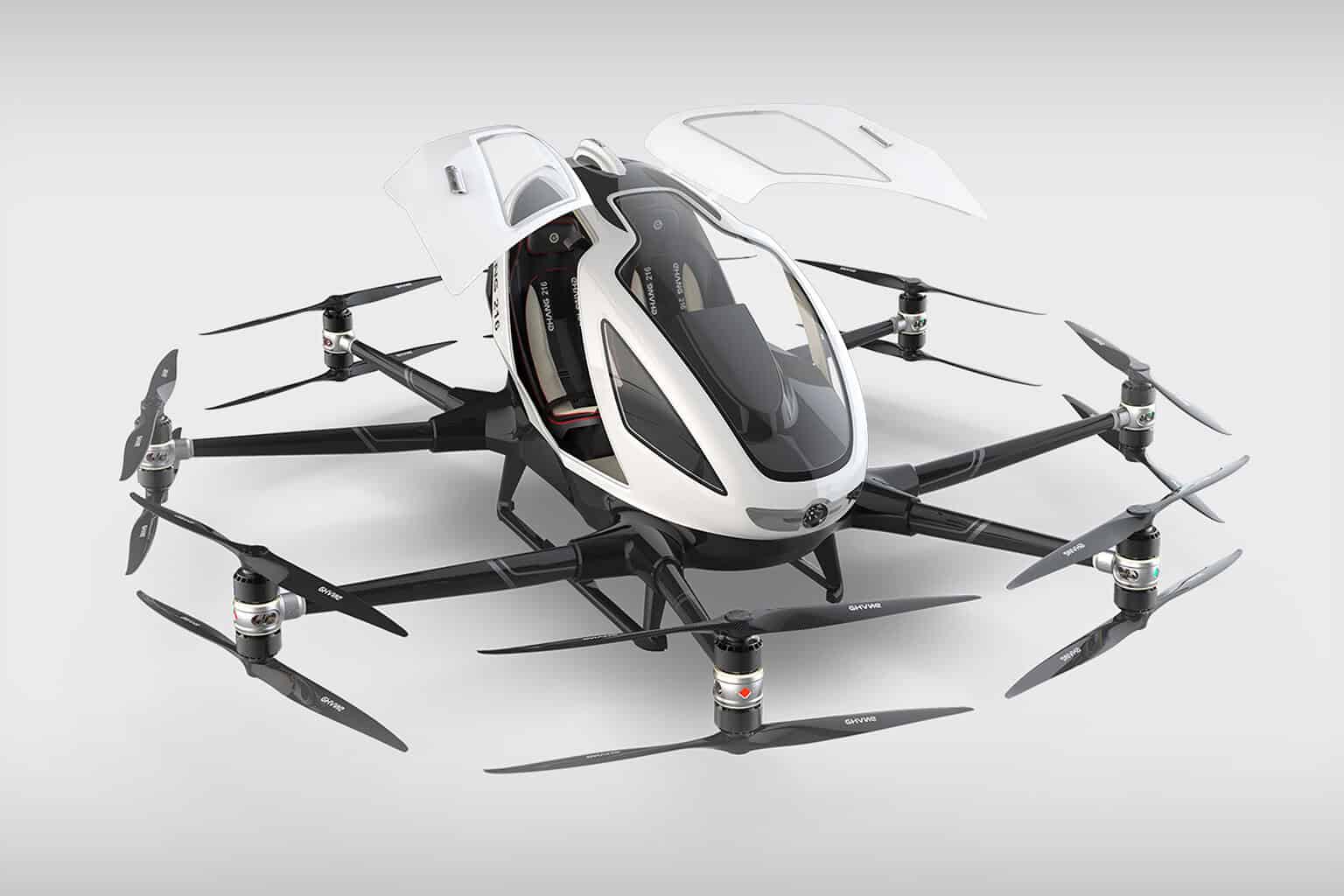
EHang EH216-S (modèle de série) – © EHang
EHang EH216-S (modèle de série) – © EHang
Investors are hesitant, but Toyota invested a further $500 million in early 2025 and is emerging as an indispensable industrial partner, enabling the company to aim for a long-term annual production capacity of … 500 aircraft!
This agreement is similar to one between Stellantis and Archer, a competitor of Joby, whose aircraft also faces certification hurdles following numerous development stages.
A judgement from an investment advisory board who has already invested more than three billion dollars: “Overall, despite the risk of a pullback in the near term, I believe Joby is well-positioned to lead the eVTOL market in the long run”.
National attitudes
An analysis of these developments in several countries reveals a high level of involvement on the part of national authorities, which are supporting their manufacturers in various ways.
China, which has already developed all the components of the electric powertrain for land vehicles and has become the world’s leading manufacturer in this field, is applying these technologies to the eVTOL sector and intends to replicate this success. Through the EHang 216 programme, EHang is set to roll out on a large scale an unmanned aircraft with very limited performance. Winged aircraft, designed to carry four passengers and a pilot, are also under development (Autoflight’s Prosperity 1, which completed the first intercity flight – without a pilot or passengers on board – on 27 February 2024; Volant Aerotech’s VE 25X1; and TCab Tech’s E20, fitted with Safran Engines). All will initially have a pilot on board. China has explored all possible configurations, including a large, 5,700 kg wingless drone with 18 lift rotors.
The US, which pioneered the Uber-style air taxi concept, has seen a host of short-lived projects, but two competitors – Joby and Archer (3175 kg, 1+4 passengers, 96 km) – stand out and are soaring towards certification with the full backing of the FAA, NASA and the US Air Force, as well as investors! They have also been selected for the eIPP trial. Both vehicles will have a pilot on board. It is worth noting that Boeing/Wisk Aero has flown its sixth-generation prototype, designed to be autonomous whilst allowing for human control from the ground if necessary; it is expected to enter service around 2030! Wisk has been selected for the eIPP trial. US manufacturers are also benefiting from presidential support: “New executive orders from the White House aim to accelerate the development and deployment of unmanned aircraft systems (UAS) and eVTOL aircraft — with a strong focus on American-made technologies” (11 June 2025). This regulatory change led to the launch of the eIPP pilot scheme.
The rivalry between these two countries is expected to lead to the operational deployment of at least one eVTOL, although the future remains uncertain due to the difficulties involved in certifying these new aircraft.
In Europe, only Germany has seen investors take an interest in eVTOLs, with the limited success mentioned above for Volocopter and for the Lilium project, deemed too ambitious. Even the development of electric motors, after a rapid start (by Siemens, subsequently acquired by Rolls-Royce), now appears to have been abandoned.
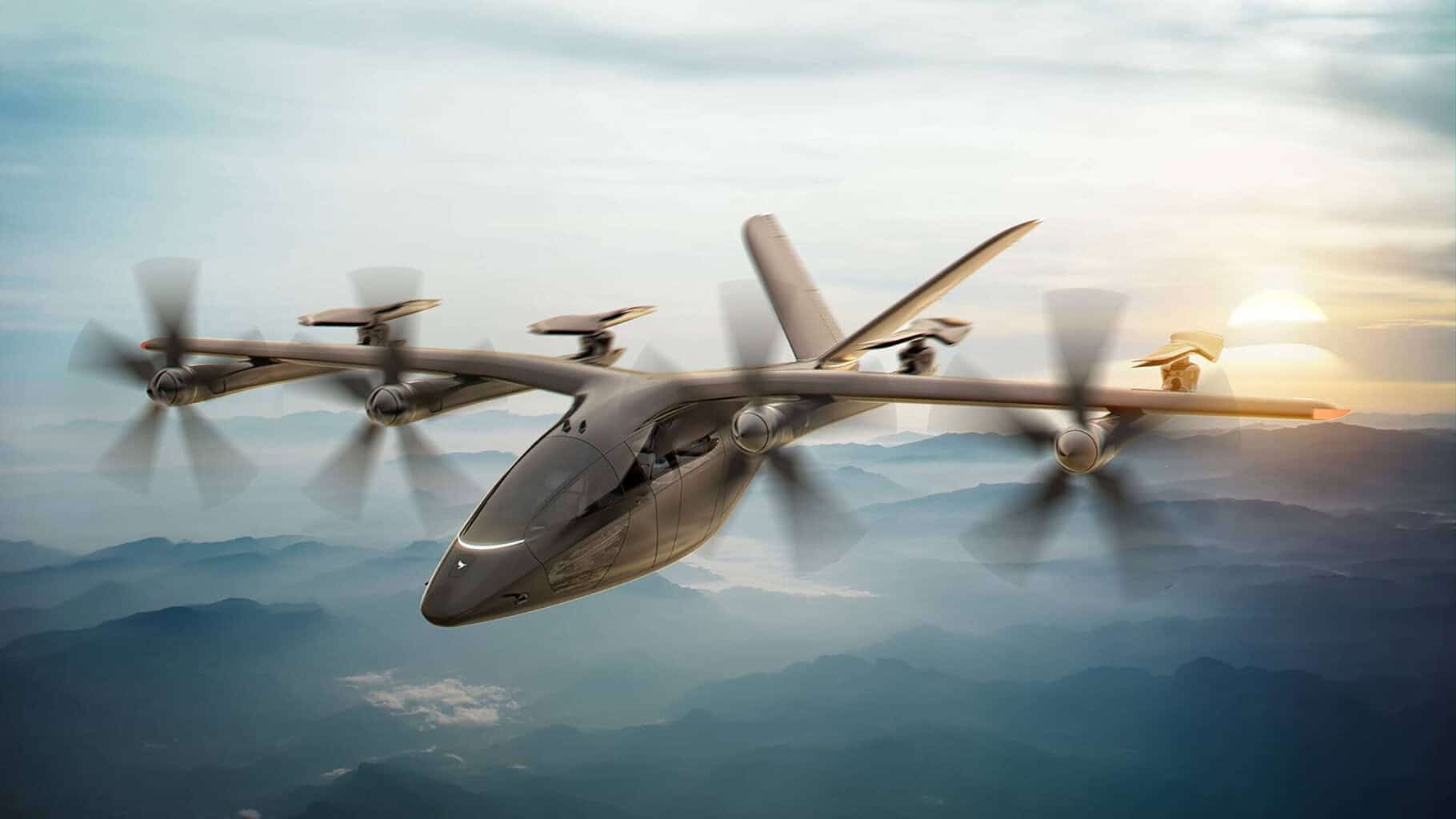
Vertical Aerospace VX4, eVTOL © Vertical Aerospace
Airbus has funded a number of research programmes (Vahana, Airbus City and Next Gen) with the aim of developing a range of technological building blocks that could be applied to a commercial programme once the size of the eVTOL market justifies it.
Safran has invested heavily in electric propulsion through the Engineus 100 programme, the first certified electric motor (24 January 2025), which has already been used in several applications.
The UK is continuing to develop the manned, convertible Vertical VX4 (MTOM 3,175 kg?, 4 passengers, 160 km) with the support of the relevant authorities; capable of meeting Uber’s specifications, the majority of its powertrain components are locally sourced. Rolls-Royce has withdrawn from the field of electric propulsion after having invested heavily in it. As the only large-scale European project, led by qualified teams in a highly aviation-focused environment, this project is now entering a second phase of development, following an accident that destroyed a prototype, caused by the catastrophic loss of a rotor blade. The CAA will be responsible for its certification, based on rules similar to those of EASA. The aircraft recently completed its critical transition flight (2 April 2026) with a pilot on board, following a first: a piloted mode flight between two airports carried out on 17 July 2025.
Since 2024, Japan (Suzuki) has been developing the Skydrive project (MTOM?, 2 passengers, 35 km), a large, three-seater piloted EHang with 12 engines and propellers, and no wings. Skydrive is currently working with civil aviation authorities in Japan and the United States to obtain certification. The first demonstration flight – with no pilot or passenger – took place on 9 February 2025.
In Brazil, Eve Air Mobility, a subsidiary of Embraer that is now independent, is developing a four-seater project with a pilot on board (MTOM ?, 1+4 passengers, 100 km), featuring a wing fitted with eight engines and fixed propellers for lift and a rear engine for propulsion. This conservative configuration should facilitate the certification process. The first ground tests took place in February 2025, with entry into service planned for late 2026.
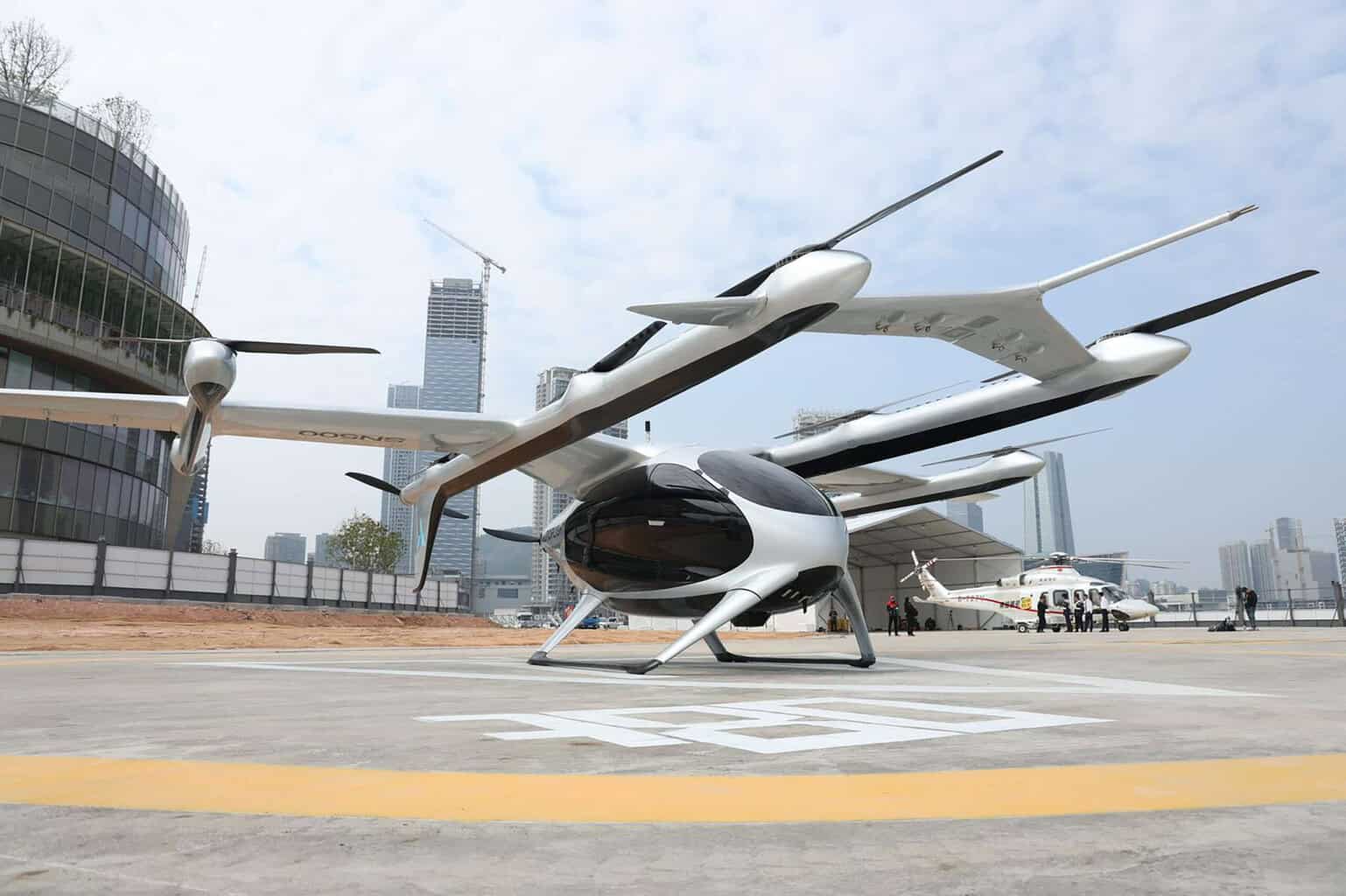
eVTOL « Prosperity » d’AutoFlight © AutoFlight
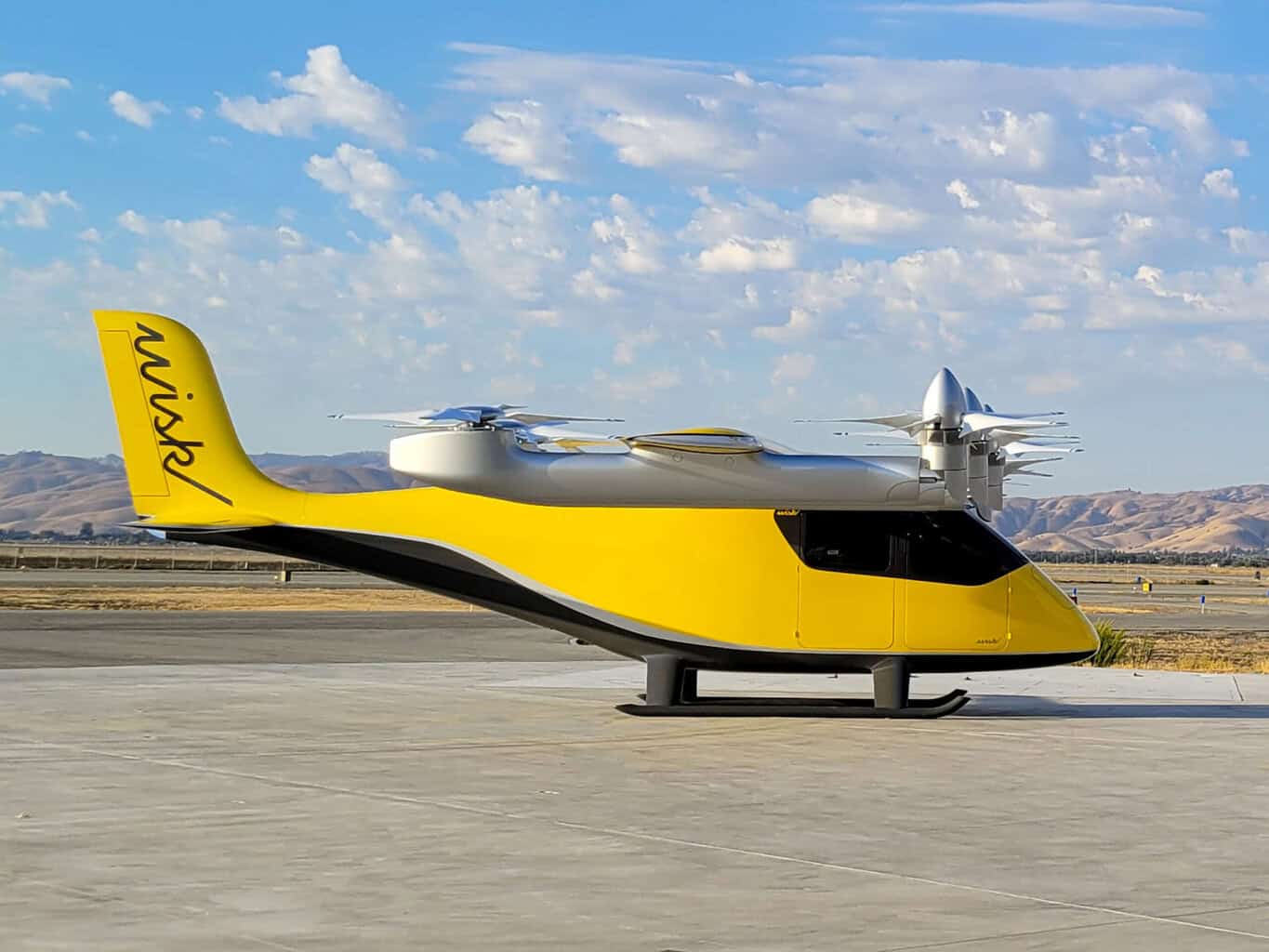
Boeing / Wisk Aero © Wisk
Continental Europe thus appears to be absent from these developments, despite the support of Brussels, which proposed “A Drone Strategy 2.0 for a Smart and Sustainable Unmanned Aircraft Eco-System in Europe” {SWD(2022) 366 final} and in its Recommendation 27 “to support large scale demonstration and validation activities and harmonise efforts by pioneer projects to validate prototyping implementations and draft standards used during real life tests”. Extending these proposals to the related field of eVTOLs would justify the launch of several technology demonstrators, in particular to determine the noise levels of these aircraft and also to study the feasibility of autonomous vehicles – key elements in considering the large-scale deployment of these aircraft.
Regulatory aspects
EASA was the first authority to publish dedicated rules, with the special condition SC-VTOL, based on high-level objectives and compliance measures drawn in particular from SC-23. The noise standards incorporate the limits applicable to large helicopters and include hovering, without any specific limit.
However, these regulations apply only to manned aircraft and will need to be supplemented to cover remotely piloted or autonomous aircraft.
The FAA has adopted a cautious approach to certification, pilot training and the regulation of urban operations. In 2023, it introduced the concept of “powered lift”, which applies specifically to aircraft whose lift depends largely on propulsion. The eIPP should help it to clarify the applicable rules.
Having previously worked separately, EASA and the FAA are now seeking to harmonise their regulations. A key parameter remains the maximum authorised weight, which has been increased to 5,700 kg/12,500 lb from the initial 3,175 kg/7,000 lb, in order to allow for larger payloads, longer ranges or other sources of energy.
Given the complexity of eVTOLs, the fact that they will fly over populated areas, and the planned frequency of flights, commercial operations must aim to achieve a level of safety comparable to that of air transport. Less stringent requirements are envisaged for non-commercial use outside populated areas.
The Chinese Civil Aviation Administration (CAAC) has set out the rules governing the entire process of putting an electric aircraft into service.
The EHang 216 was authorised following more than 50,000 demonstration flights with no reported accidents, paving the way for the certification of more complex aircraft.
EASA also emphasises the integration of eVTOLs into urban airspace and their interaction with other aircraft and drones, in particular through:
- integration into the U-Space system and the development of dedicated corridors;
- certification of vertiports that meet safety requirements for managing take-off and landing in densely populated urban areas, whilst ensuring the safety of passengers and ground staff.
Outside this urban airspace, eVTOLs should be subject to the same rules as helicopters.
Noise pollution
Despite the development of sophisticated, eVTOL-specific analytical methods by experts at the major universities and research organisations, there is still no validated method for quantifying the noise levels of these complex multirotor aircraft.
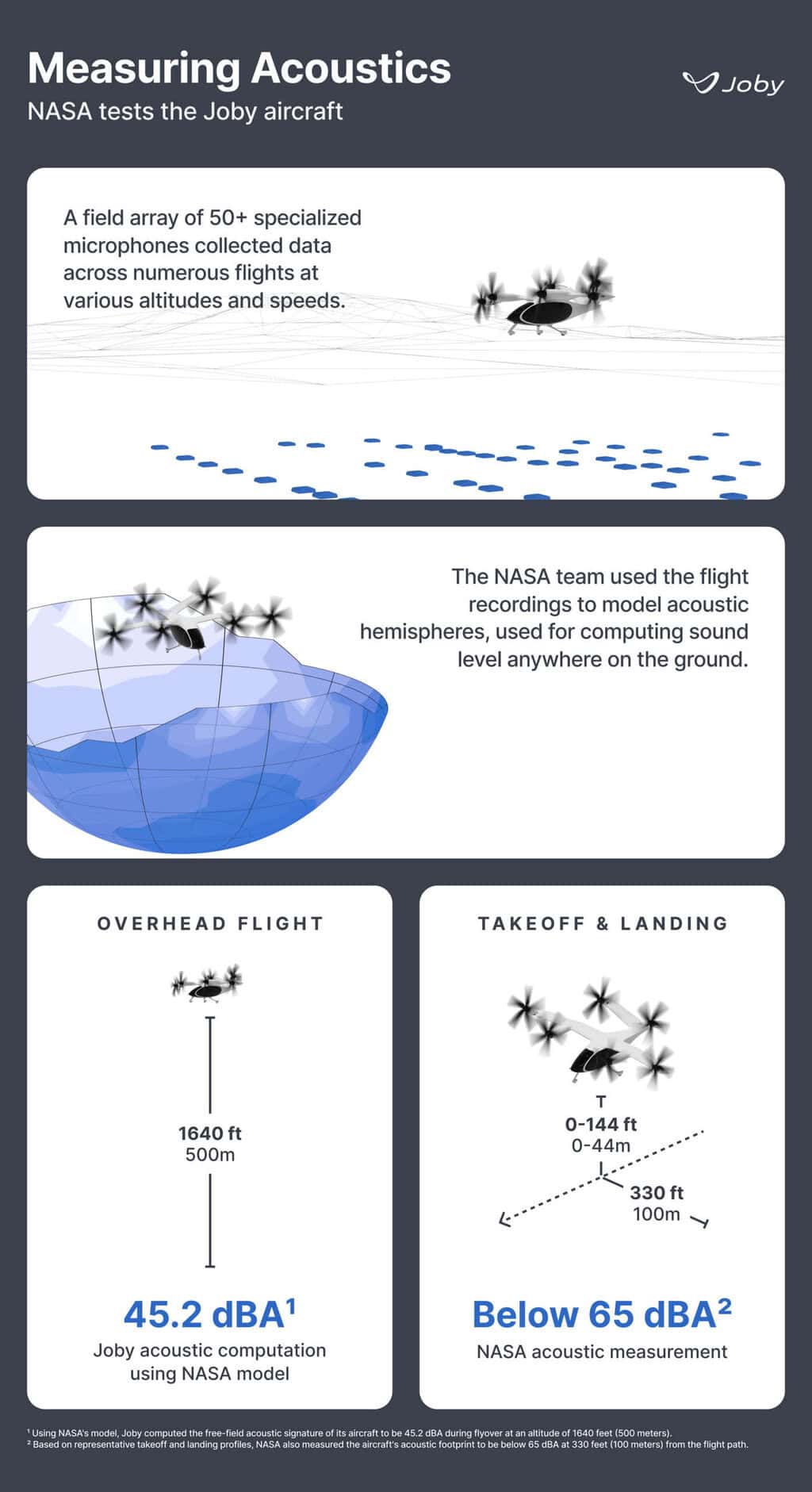
Joby and the FAA carried out a series of noise tests which confirm a very low noise level during the “cruise” phase (45.2 dBA at 500 m), as anticipated, and a level below 65 dBA at over 100 m for the take-off and approach phases, expected to be at the upper limit of what might be acceptable for busy flight frequencies.
However, one should not assume that a dBA measurement, without knowing the exact conditions of the test area and the vehicle under test, will be enough to confirm that noise levels are within the limits imposed by certification and, above all, will be acceptable to local residents. Currently, for transport aircraft, a high number of flights locally, even complying with noise certification levels, leads to the publishing of noise level maps restricting residential areas, aids for soundproofing homes, as well as possible restrictions on the number of flights. Noise level figures alone cannot predict acceptability without taking into account the effect of repeated flights and the density of the local population.
A similar approach is required for eVTOLs, which have specific acoustic characteristics and flight conditions. It also seems to be generally accepted that these eVTOLs, which are very quiet during cruise flight, will have noise levels during take-off, hovering and final approach on a par with those of helicopters of the same weight.
Public acceptance
The failed bid for the Paris 2024 Olympic Games revealed signs of systematic opposition preventing innovative concepts from being assessed under representative operational conditions. This level of opposition does not appear to exist in other countries, and it is reasonable to assume that many similar trials currently being planned in major cities abroad will provide quantified data on nuisance caused and acceptability.
Two recent catastrophic helicopter accidents in the US have led to restrictions on intra-urban flights discouraging the development of eVTOLs. eVTOLs will therefore need to demonstrate a significantly improved level of safety as perceived by the general public, which the safety objectives mentioned above should help to achieve.
eVTOL: Summary and takeaways
The original aim of the inventors of the eVTOL concept was to develop an air taxi service accessible to all, made possible by the following improvements over rarely used helicopter taxis:
- no pollution or emissions into the atmosphere, and a reduction in noise pollution;
- improved safety thanks to the redundancy of the propulsion system;
- reduced operating costs thanks to electrical components that are known to be less expensive to purchase and maintain and consume less energy, and autonomous flight without a pilot on board;
- swift improvements to the initially limited performance of the taxi application, thanks to advances in battery technology.
Only some of these objectives have been achieved:
- The elimination of air pollution has been achieved, but the reduction in noise pollution has yet to be demonstrated. Furthermore, public mistrust has become clearly evident in France and is likely to be the case across Europe as well. This stems not only from noise nuisance, but also from the perceived intrusion caused by these aircraft entering public living spaces.
- Redundancy has been enhanced, but it remains to be demonstrated that the safety level required by Western certification has been achieved (the large-scale operation launched by the US administration should provide an initial indication): this is certainly possible, but likely to come at the cost of additional complexity and higher acquisition costs. The public also needs to be convinced that the certified safety level is acceptable. This will certainly take time, requiring a track record of accident-free flights.
- The targeted cost reductions have not been achieved. Development and certification costs are much higher than anticipated and have led to projects going bankrupt or being abandoned. Above all, however, acquisition and operating costs have not been reduced to the extent intended, as the reduction in component costs only partially offsets the impact of redundancies, and removing the pilot is not feasible, at least in the short to medium term. Finally, the utilisation rate (flight hours/year) anticipated by the promoters – significantly higher than that of helicopters – is far from achieved.
- Performance remains limited and affects versatility, although it is acceptable for the UAM application.
Public opposition and persistently high operating costs are limiting the development of an air taxi service, whose volume is expected to remain similar to that of helicopter taxis in the short to medium term.
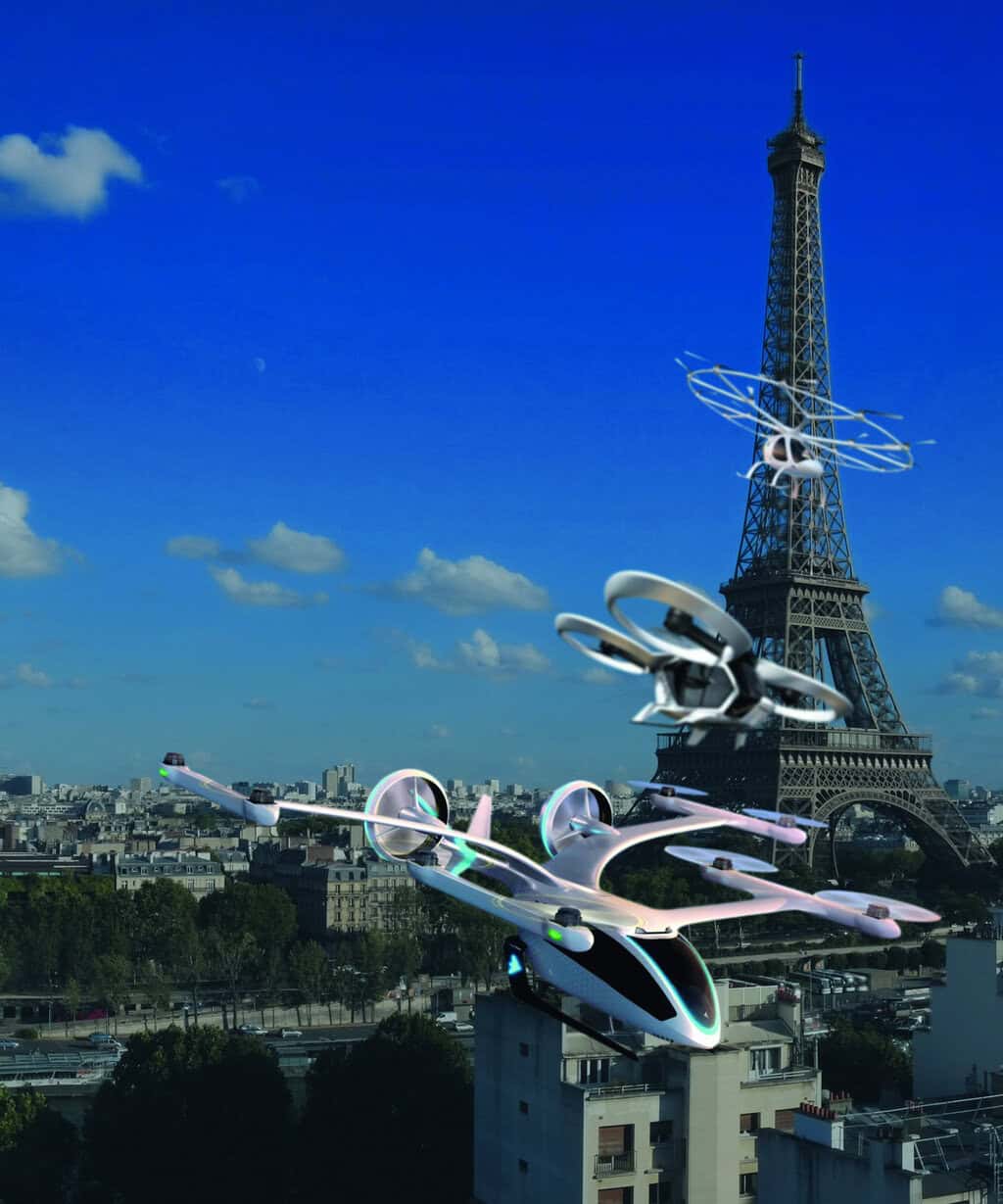
Drone flight over Paris, artist’s impression
In addition to the air taxi application, there was hope that the eVTOL concept could gradually replace small helicopters in all their roles. This hope remains, but its realisation depends largely on the ability to improve performance in order to achieve an endurance level close to that of helicopters (two to three hours) and to demonstrate lower operating costs. Major technological advances will be required to achieve this.
One new development that may accelerate improvements in performance and reductions in operating costs is the development of military drone applications (often derived from civilian drones) that are now being produced in their thousands. It is true that these drones are predominantly small and do not face the same environmental and safety constraints as civilian eVTOLs. However, their size and performance are increasing, and a degree of component commonality could help meet the cost targets for civilian eVTOLs.
After more than ten years of analysis and costly development, Western certification of piloted eVTOLs for air taxi operations has not yet been achieved and remains contingent on the results of the three-year US trial involving eight American aircraft. The final phase of certification could then be based on regulatory frameworks that have now been harmonised.
A Chinese project, albeit one with modest specifications, is, however, set to commence commercial operations without a pilot on board. This Chinese certification marks an important milestone in the development of eVTOLs, with China also developing a wide variety of electric aircraft within a national regulatory framework.
These developments are supported by the various national authorities and reflect very intense competition, particularly between China and the US. This competition will provide a real incentive to see these projects through to operational readiness, as long as security goals are met. It is worth noting the low level of involvement from European manufacturers; following a very active initial phase, only the UK is currently developing an aircraft of this type.
In conclusion, the future of eVTOLs remains uncertain, and the results of the eIPP in the United States will help to clarify the acceptability of these various innovative aircraft concepts on a controlled experimental basis, under representative operational conditions.
The air taxi application originally envisaged is unlikely to develop as quickly or on the scale originally anticipated, but this technology may find its place in the VTOL market if battery performance improves sufficiently, particularly as component solutions converge with those used in drones.
Other posts in News :