Air and Space in the Age of AI
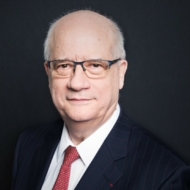
Guy TARDIEU
Former president of OSAC, member of the AAE
As Luc Ferry1 regularly announces on Radio Classique on Monday mornings when he tackles the subject of Artificial Intelligence: “AI is both the best and the worst, but we are no longer able to do without it”.
He also pointed out that “artificial intelligence” might not be the ideal terminology, implying as it does concepts of intelligence or reasoning. AI has no consciousness, no thought, no sensitivity – at least not yet!
Why not also refer back to what was set out a while back in the EASA roadmap: “technology that can, for a given set of human-defined objectives, generate outputs such as content, predictions, recommendations, or decisions influencing the environments they interact with”.
AAE Newsletter no.136 had already detailed many issues relating to AI. But the world of AI is evolving rapidly – very rapidly. We therefore sought in this issue to provide further examples: I start off with an overview of the rise of artificial intelligence in the aviation and space sectors, highlighting the expected gains in terms of performance, safety and decision support, as well as the need to preserve human accountability, risk management and the adaptation of regulatory frameworks. Erwan Prud’homme demonstrates, through a review of feedback from civil aviation, that the value of artificial intelligence lies above all on the quality of the data, the robustness of the algorithms and the maintaining of human expertise in the face of generative AI. Patrick Peureux analyses the transformations taking place in the aerospace sector as a result of AI and identifies the strategic levers that companies must implement to support this evolution. Finally, Bertrand de Courville provides a summary of the questions put to Guillaume Soudain of EASA following his presentation at the Flight Safety Foundation forum held in Brussels on 30 June and1st July 2026.2
We have all noticed the speed at which the AI landscape is evolving. Every article on the subject becomes obsolete as soon as it is written, let alone published. Debates centred more on ethics, or even philosophy, are emerging from the highest echelons of AI decision-making, focused on the question of whether it is appropriate to accelerate further or rather to proceed with caution.
1. French philosopher, former Minister of Education
2. See also the speech by António Guterres, UN secretary general, on 6 July 2026 at the first ‘Global Dialogue on Artifical Intelligence Governance’ in Geneva: https://press.un.org/en/2026/sgsm23211.doc.htm