Collective defence of Europe and European defence*

Antoine Bouvier
Former head of Strategy at Airbus, associate member of CAIA, AAE member
* Text originally published in issue 136 of the magazine of the Confédération amicale des ingénieurs de l’armement (CAIA) and reproduced with its kind permission.
It is time for Europe to take charge of its own defence. Faced with the uncertainties and limitations of the collective defence of Europe, the European defence sector (i.e. cooperation programmes) has a key role to play that is often underestimated.
Uncertainties and limitations of Europe’s collective defence
National defence is a sovereign matter, “the primary raison d’être of the State” according to General de Gaulle.
However, the collective defence of Europe is currently ensured by NATO.
Article 42.7 of the Treaty on European Union (TEU) stipulates that Member States shall assist each other in the event of armed aggression on their territory, but it also emphasises that NATO “for those States which are members of it, remains the foundation of their collective defence and the forum for its implementation”.
The North Atlantic Treaty Organisation (NATO) is a collective security system based on Article 5 of the Treaty, which states that an armed attack against one member shall be considered an attack against all.
In June 2025, on his way to the NATO summit in The Hague, President Trump stated that “Article 5 could be interpreted in several ways” which, although legally accurate, calls into question the implicit assumption of European defence since NATO’s inception, namely that American military support would be automatic in the event of an attack on a European NATO member. NATO’s protection is uncertain.
When Michel Debré travelled to Washington to inform Robert McNamara that France’s nuclear deterrent was operational, the US Secretary of Defence did not openly express delight, saying essentially: “Don’t think for a second that the US will allow France to draw it into a military and nuclear escalation contrary to its strategic interests and endangering American territory”.
Ukraine is not a NATO member. However, that was also the blunt message President Trump delivered
to President Zelensky in the Oval Office in February 2025: “You are gambling with World War III”. This ambivalence lies at the heart of the Atlantic Alliance, which is both an irreplaceable foundation for the collective defence of Europe – for the time being at least – but also a means of control for the United States.
Is the EU an alternative to NATO for Europe’s collective defence? We are still a long way from that. The current Common Security and Defence Policy (CSDP) is limited to peacekeeping operations outside the EU. Could it evolve to provide the EU with collective defence? Article 42.7 provides the answer: “The CSDP will lead to a common defence, when the European Council, acting unanimously, so decides”. This is not for tomorrow.
Another option would be to form an ad hoc coalition of “able and willing” countries. This is currently being considered as a means of providing Ukraine with security guarantees. However, we should bear in mind the words of Marshal Foch: “Since I have commanded a coalition, I admire Napoleon much less”.
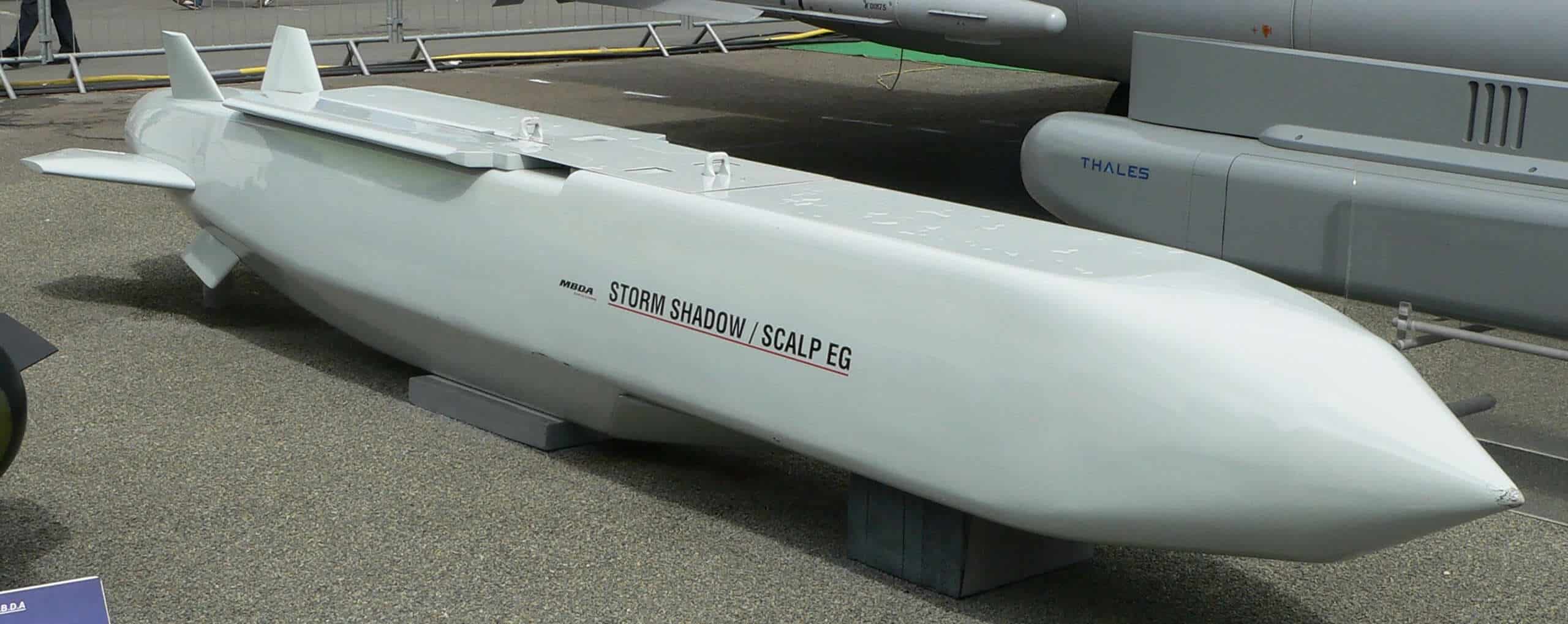
Scalp Stormshadow de MBDA. / MBDA’s Scalp Stormshadow. Photo © 2007 David Monniaux CC
Promising European defence
Amidst uncertainty and ambivalence within NATO, treaty constraints on the EU, and doubts about the effectiveness of ad hoc coalitions, the collective defence of Europe is an institutional and strategic headache.
Even more so since, on average, European countries have purchased over 60% of their defence equipment from outside the EU in recent years, mainly from the US. Most European countries are in reality dependent on the Americans to implement their military capabilities.
So, what should be done?
Admittedly, European cooperation in armaments programmes has had mixed results, with the very foundations of European cooperation shaken by strategic differences or industrial rivalries between nations. And yet, wouldn’t an ambitious new wave of cooperation programmes go a long way towards Europeans taking charge of their own defence?
In light of the uncertainties and limitations of Europe’s collective defence, surely reinforcing the European defence sector, i.e. mainly the continent’s armaments programmes, is an “ardent obligation”?
Several major structural programmes – some inter-state and some EC-based – cover most technological and industrial capabilities, incorporating new offensive and defensive capabilities, including cyber technology, multi-environment drones, artificial intelligence (AI) and autonomy. There are six main ones:
There are six main ones:
- SCAF (Future Air Combat System): a cooperation project between France, Germany and Spain, SCAF is not just an aircraft, it is a cloud combat system applying the Air & Space Power capability concept in Europe.
- MGCS (Main Ground Combat System): a Franco-German programme for a future battle tank and future land combat system, a flagship programme for KNDS; after a difficult start, latest developments are encouraging.
- ENGRT (European Next Generation Rotorcraft Technology): the European option for the future combat helicopter, financed by the European Defence Fund; in competition with an American bid promoted by manufacturers and the American administration based on the F-35 programme.
- FC/ASW (Future Cruise and Anti-Ship Weapon): a Franco-British programme developed by MBDA called “Stratus”, the future of anti-ship missiles and strike depth; a successor to Scalp, Storm Shadow, Exocet and the American Harpoon missile in service in the Royal Navy.
- IRIS2: a constellation of low-orbit telecommunications satellites, Europe’s response to Starlink and SpaceX, this dual programme is partly funded by the European Commission.
- FMTC (Future Mid-size Tactical Cargo): a European Defence Fund programme, this military cargo aircraft is designed to replace the American C130, more than 2,000 units of which have been produced.
Despite sparking heated debates and regularly making the headlines, from a long-term geopolitical perspective, these programmes are the only way for European nations to purchase predominantly European equipment and develop common operational capabilities, guaranteeing autonomy of use.
If these programmes, currently under threat, are not confirmed, the consequences would be disastrous, with fragmentation in Europe and procurement outside Europe.
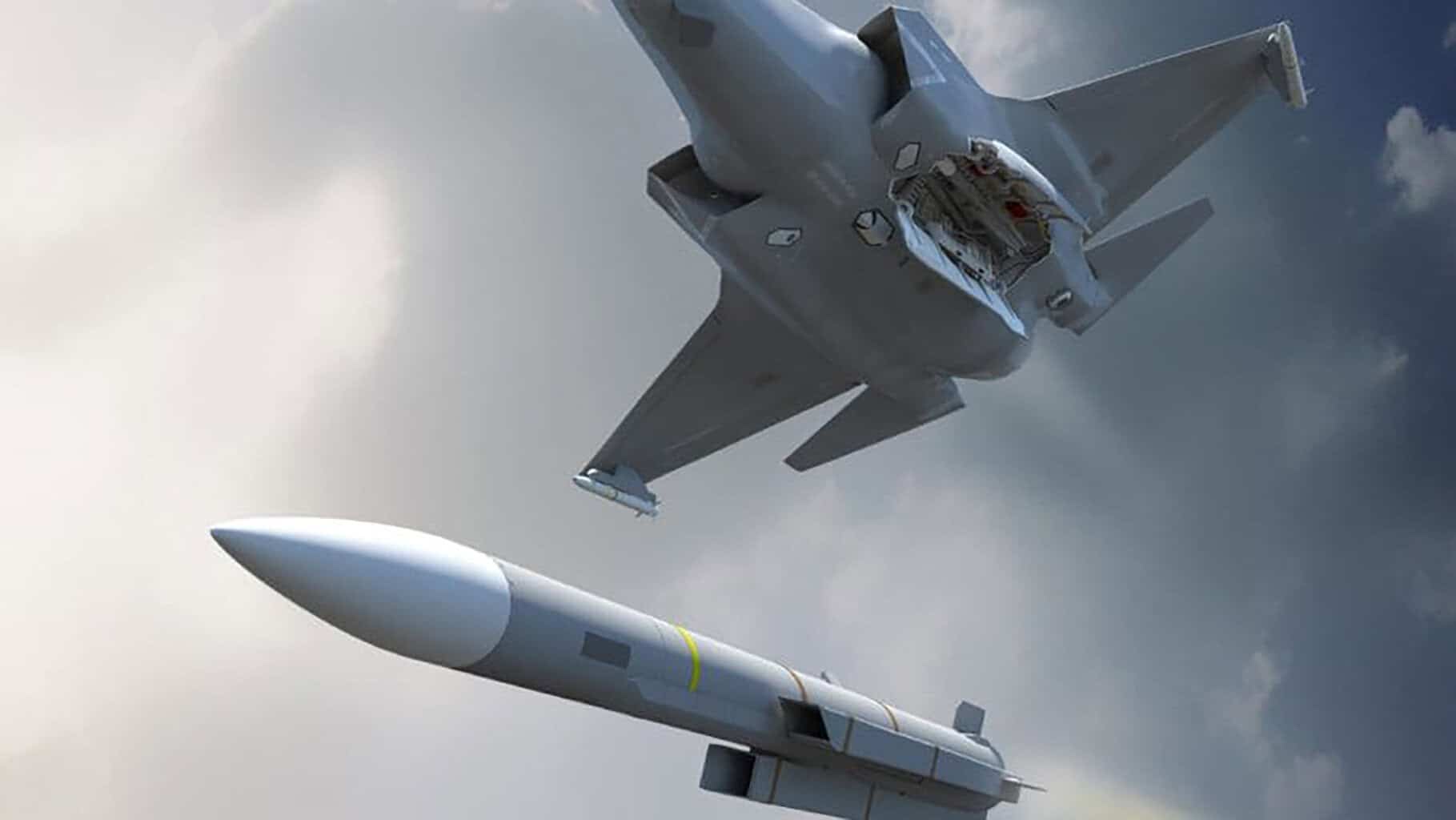
Le Meteor de MBDA. / MBDA’s Meteor. Photo © MBDA
An ardent obligation
It is the historic responsibility of French and European manufacturers to work together to implement these programmes in European cooperation.
As Churchill said, “democracy is the worst form of government, except for all the others”. The same can be said of cooperation.
It is time to move beyond nationalistic approaches and longstanding tensions between European nations; time to learn from the mistakes and the successes of the past; time to breathe new life into European defence.