MeteOps 2025 Operational decision- making through weather intelligence
Guy Tardieu
Programme committee, member, AAE
Alain RATIER
Programme committee, member, AAE
In November 2025, the Air and Space Academy (AAE) organised the METEOPS conference in Eurocontrol HQ Brussels, bringing together over 120 international experts to address the escalating impact of the weather on aviation and space operations. Many thanks go to Eurocontrol for their support as well as our institutional sponsors, which included Apave (Osac), Thales, La Réunion Aérienne and La Réunion Spatiale. Over two days, high-level speakers and participants explored how advanced data, innovative tools and collaborative decision-making can mitigate risks, enhance safety and reduce costs in an era of climate change.
Weather hazards – thunderstorms, volcanic ash, contrails, and wind shear – disrupt operations daily, costing billions in delays, damages, and lost revenue. With severe turbulence up 55% since 1979 and extreme weather events becoming more frequent, the need for adaptive, technology-driven strategies has never been more urgent. The conference aimed to translate challenges into actionable solutions, fostering cross-sector collaboration to build resilience.
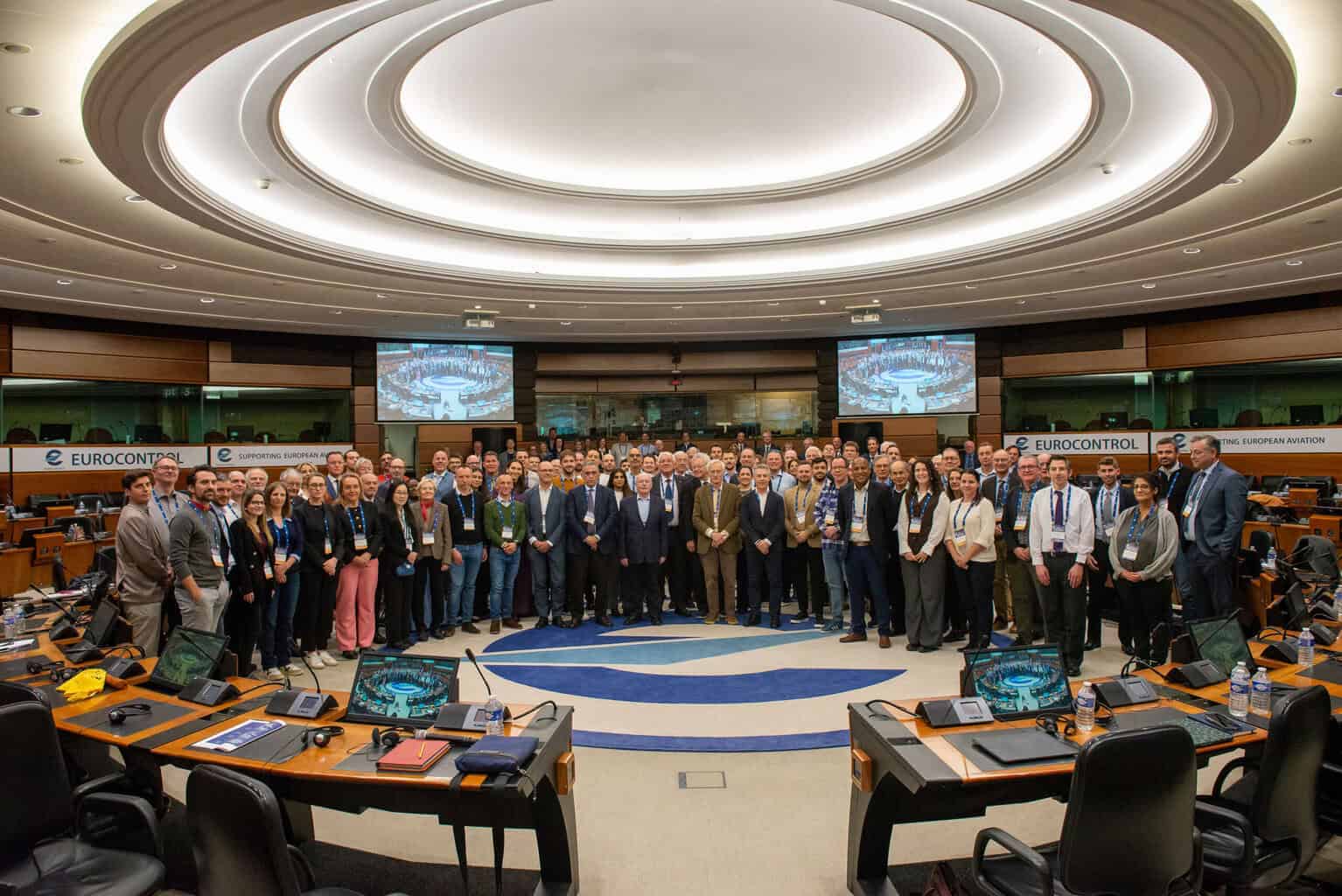
Delegates from 18 countries in the Eurocontrol conference hall . Photo © Eurocontrol/AAE
The rising stakes of weather disruption
Weather-related incidents cause hundreds of cases of aircraft damage and thousands of flight delays annually. Thunderstorms, clear air turbulence and poor visibility are not just operational nuisances, they pose serious safety risks. Traditional forecasting and response mechanisms struggle to keep pace with the new reality of climate change, which is intensifying weather patterns and increasing operational uncertainty.
For spaceports and launch operators, weather presents unique challenges. Overly conservative wind shear assumptions can unnecessarily restrict launch vehicle capacity, while inaccurate wind profiling threatens mission success. As commercial spaceflight expands, the demand for precise, reliable weather intelligence grows.
The conference made clear that climate change is not a distant threat but a current operational factor. Extreme temperatures, heavier rainfall and more frequent storms are reshaping risk profiles, compelling both aviation and space sectors to integrate climate projections into their decision-making processes.
Innovation through collaboration
METEOPS 2025 built on AAE’s 2010 conference on Air Traffic and Meteorology, updating recommendations with the latest technological advancements and emerging threats.
Bruno Stoufflet, AAE president, opened the event by emphasizing the need for independent, forward-thinking solutions.
With over 40 high-level speakers from airlines, spaceports, ATC, meteorological services, and equipment manufacturers, the conference provided a rare platform for diverse perspectives. This breadth was essential, as weather impacts every aspect of operations, from pilots and controllers to ground crews and passengers.
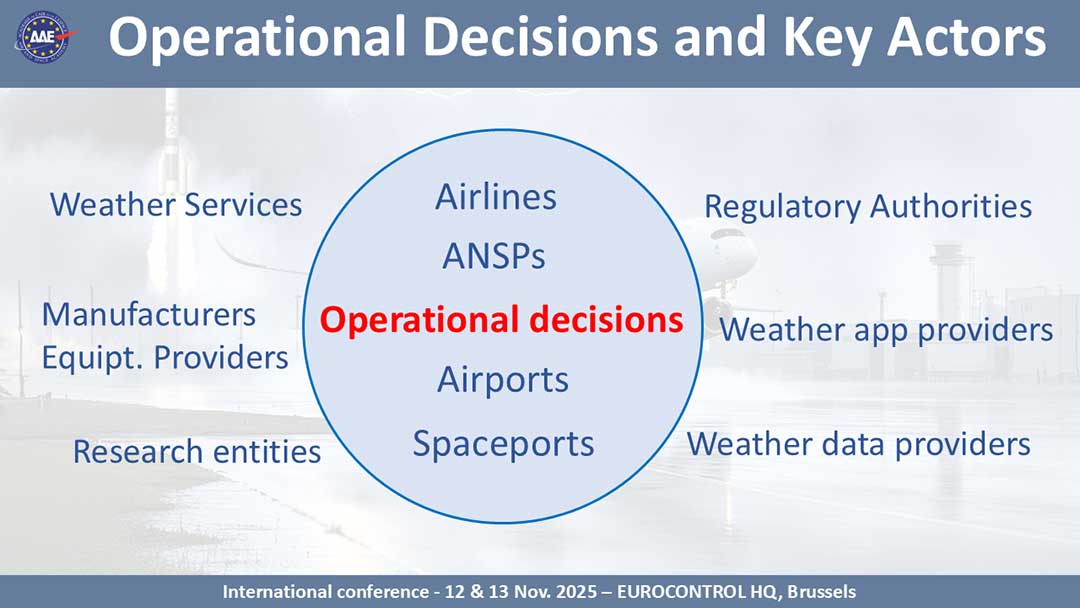
Operational decisions and key actors. © AAE
Key insights and breakthroughs
The breakdown published by airlines on a regular basis does not specifically include weather aspects. The first session therefore aimed to quantify the impact of weather in terms of direct costs (aircraft damage, ground facility repairs and emergency responses), indirect costs (network disruptions, crew scheduling chaos and passenger inconvenience) and systemic risks (ATC flow saturation, en-route damage and cascading global delays). Data showed that weather-induced disruptions are not only increasing in frequency but also in severity, with far-reaching consequences across the entire operational ecosystem.
The second session highlighted cutting-edge solutions. AI and machine learning are powering high-resolution weather models and delivering probabilistic forecasts with unprecedented accuracy. In addition, collaborative platforms enable real-time information sharing between airlines, airports and ATC, while advanced sensors and onboard equipment provide pilots with real-time hazard detection and avoidance capabilities. Eurocontrol and Air France, for example, have established dedicated meteorological desks to monitor and respond to weather threats 24/7.
Technology alone is insufficient. The third session therefore focused on the human element in decision-taking. It highlighted the importance of standardized terminology and communication protocols to provide a consistent interpretation of weather information, as well as training and certification to build trust in new tools, particularly among pilots and controllers. Scenario planning, which integrates long-range forecasts with short-term “nowcasting”, also enables dynamic adjustments.
The final session explored emerging opportunities, including AI-driven forecasting, which promises greater precision and lead time for high-impact weather events. Climate-optimized flight paths, capable of minimizing contrail formation and reducing environmental impact, were also examined and cross-sector collaboration encouraged, for the mutual benefit of aviation and space operations, especially in managing wind, lightning, and turbulence.
Progress and pathways forward
The conference showcased significant progress since 2010, including improved weather information and decision-making processes, thanks to better data sharing and high-resolution models; enhanced collaboration at airports and between airlines and ATC, reducing fragmentation and improving efficiency; and standardized digital weather information to ensure that all stakeholders operate from the same playbook.
To sustain momentum, stakeholders identified four key goals:
- Shared understanding: align all parties, from airlines to spaceports, on goals, tools, and constraints.
- Progressive implementation: roll out new technologies collectively to ensure safety and avoid fragmentation.
- Certification and safety: adapt frameworks to keep pace with rapid advancements in AI and digital tools.
- Continuous dialogue: regular forums to share knowledge, experiences, and best practices.
Voices from the field
Willie Walsh, CEO of IATA, stressed the need for better data, technology, and collaboration. While real-time data and AI are already helping pilots avoid turbulence, he noted that standardized information sharing and trust-building remain critical.
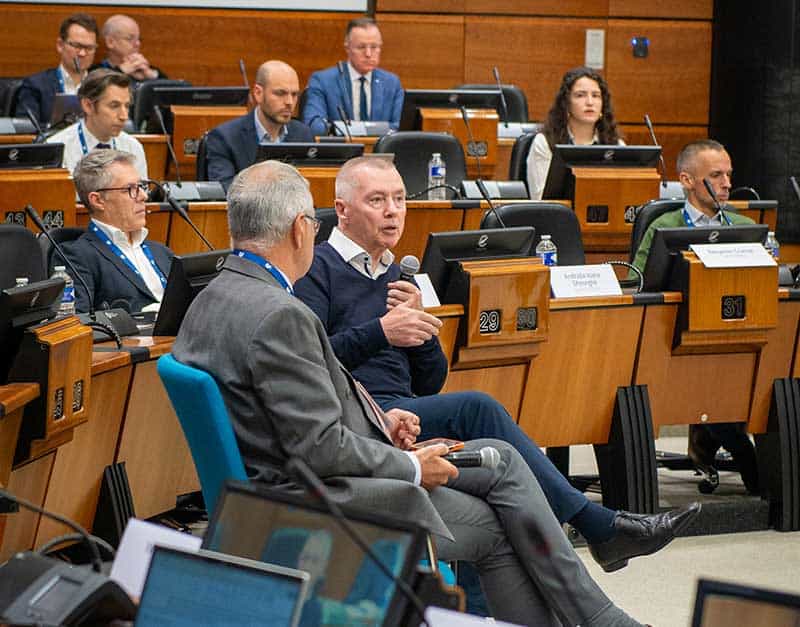
illie Walsh, director general of IATA, with AAE president Bruno Stoufflet, during opening discussions. Photo © Eurocontrol/AAE
Airport operators highlighted the high cost of weather-related mitigation, such as hurricane and flood preparedness. They called for more reliable predictions and open access to multiple weather models to inform decision-making.
Aircraft and equipment manufacturers emphasized early engagement with operators to identify solutions before full-scale development. Boeing, for instance, is exploring dedicated sensors to validate contrail forecast models.
Ongoing research into climate-optimized flight paths shows promise. Improved weather models could soon predict conditions favoring contrail formation, enabling proactive network planning and further reducing environmental impact.
Conclusion: a unified approach to weather resilience
METEOPS 2025 demonstrated that while weather remains a formidable challenge, collaboration and innovation can transform risks into opportunities. By leveraging advanced technology, sharing data, and fostering dialogue, the aviation and space industries can enhance safety, reduce disruptions, and lower costs.
As Bruno Stoufflet observed, “Success comes when all these steps align with the final goal: improved management of real-life operations in adverse weather.”
The path forward is clear: continued investment in technology, training, and cooperation will ensure that weather – no matter how extreme – does not ground our ambitions for safer, more efficient skies and space.
Article originally published in Newsletter No 140