• RAeS Conference – Towards a Space Enabled Net Zero Earth

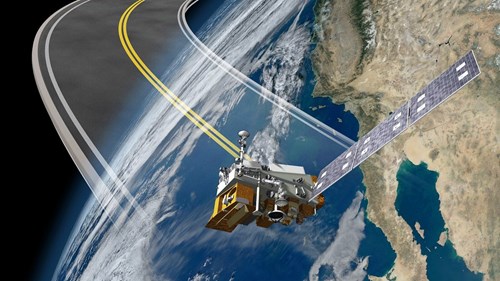
    Continuous observations from satellites over multiple decades have provided a critical contribution to our knowledge and understanding of climate change. This incredible technology has helped determine accurate variations of key climate parameters such as sea level, greenhouse gases, arctic sea ice and forest cover. Going forward into the new decade the space sector is showing […]

  • Light on the dark side of the Universe

    By Peter von Ballmoos, astrophysicist, teacher-researcher at the University of Toulouse, IRAP. Dark matter, dark energy, inflation, baryonic asymmetry are today essential hypotheses to explain the Universe we observe. While the very nature of these hypotheses remains stubbornly obscure, their mathematical formalism manages to model the observations with a very high degree of precision. This […]

  • Ultraefficient Aircraft Technologies – Key Building Blocks on the Way to Sustaineable Flight

    Mini Symposium in cooperation between the DGLR (Fachbereich L2 - Bemannte Luftfahrzeuge) and the Air and Space Academy Ultraefficient Aircraft technologies for low drag, low weight and low specific fuel consumption are more important than ever to master the challenge towards more sustainable flight. Significant efficiency improvements are mandatory to limit the fuel consumption for next generation […]

  • Decarbonizing Regional Aviation: An Incremental Approach

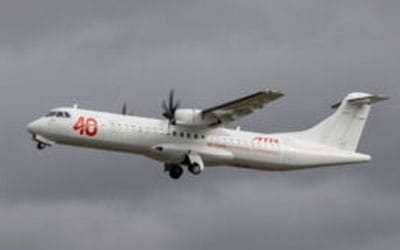
    By Stéphane Viala, Senior Vice President Engineering, Head of Design Organization, ATR ATR (Regional Transport Aircraft) is the world leader in the regional turboprop segment. ATR created in 1981 to celebrate its 40th anniversary in 2021. Since its creation, the ATR has relied on a low carbon footprint by implementing a policy of incremental evolution […]

  • Air transport in crisis and the climate challenge

    Lecture by Michel Wachenheim, president of Air & Space Academy The lecture will present the challenges that aviation has to overcome for decarbonising its activities: clear and believable communication, technology capabilities including infrastructure, economic impacts, global interoperability including international strategies, and common assessment of the societal value of air transport. This presentation will refer to […]

  • Towards new European military helicopter programmes

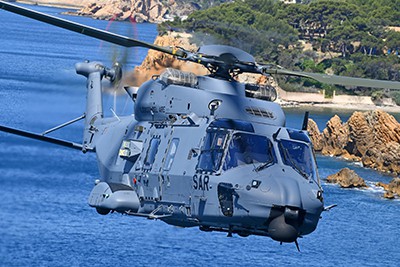
    NH90 of the Spanish Air Force © AIRBUS An Air and Space Academy working group carried out an analysis that looked back on the development procedures of today’s military rotorcraft, the vast majority of which were built in European cooperation, in order to identify the needs, threats, and specifications to be taken into account for […]

  • Mars, in search of life!

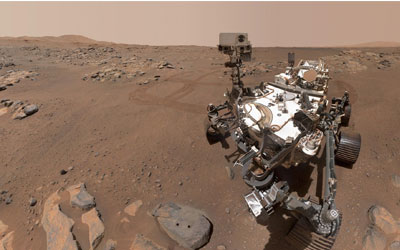
    By Sylvestre Maurice, astrophysicist at IRAP, specialist in Martian exploration, correspondent of the AAE. These are great times! To date, 12 vehicles are operational around Mars or on its surface. A trophy of national supremacy, a field of technological experimentation, a source of wonder for the people who fervently follow this adventure, the exploration of […]

  • EUCASS

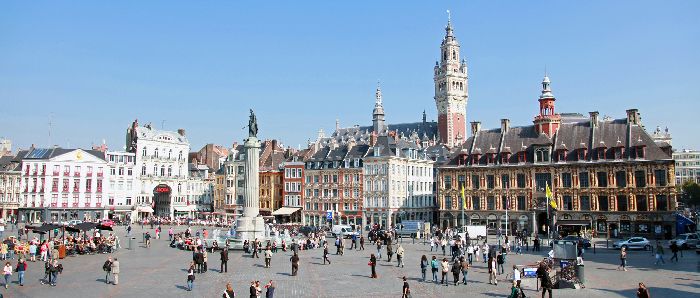
    France and Belgium are joining forces and invite you to Lille (France, #hellolille) from July 3 to 7, 2022, on the occasion of the 9th European Conference of Aerospace Sciences organized by EUCASS. This edition has received the support of the Association Aéronautique et Astronautique de France (3AF) and will be produced in partnership with […]

  • CAETS 2022 “Engineering a better world: Breakthrough Technologies for Healthcare”

    The Académie des technologies, in partnership with Dassault Systèmes and with the support of Air Liquide, Fondation Bettencourt Schueller, Fondation de l'Académie des technologies, Servier, European Institute for creative Strategies & Innovation, and Paris Club of Innovation Directors, organizes this year the World Congress of CAETS (International Council of Academies of Engineering and Technological Sciences) […]

  • Europe conquering exoplanets

    By Willy Benz, Professor of Astrophysics, University of Bern, President-Elect International Astronomical Union (IAU), AAE correspondent. The discovery of the first exoplanet in 1995 by Michel Mayor and Didier Queloz (discovery awarded the Nobel Prize in Physics 2019) triggered a real revolution in astronomy with the aim of characterizing these planets and searching for life […]

  • Security in space: a societal challenge of the 21st century

    By Gal. Jean-Daniel Testé, former Joint Space Commander, France Director of AEROSPACELAB, AAE correspondent. In a world where space risks and threats (debris proliferation, anti-satellite weapons experimentation, unfriendly actions in space) are steadily increasing, accurate knowledge of space activities is today a great challenge for space nations around the world. France and Europe must play […]